Home › Male Enhancement › Erectin Review
Claim investigationErectin Review: Its “Clinical Study” Tested VigRX Plus — and the Two Cost Exactly the Same
Erectin calls itself clinically proven and points to a published trial of 78 men. We read that paper and the study report Erectin links to, compared both with Erectin’s own pages, and priced both products side by side. The study is real. It just isn’t about Erectin.
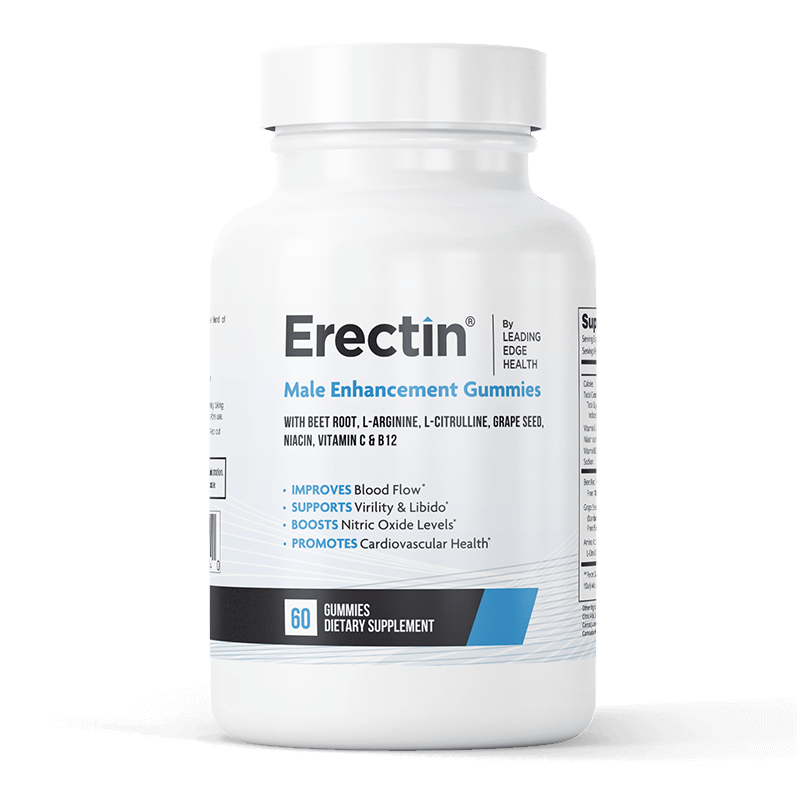
Erectin borrows the trial of its sister product, VigRX Plus — which sells for the same $69, $177 and $294. We can’t find a reason to pay the same money for the untested one.
- No trial of Erectin itself
- Cited trial = VigRX Plus
- Same price as VigRX Plus
- No doses on the site
- Refund minus shipping
✓ Checked 14 October 2026 — prices, dosing and refund terms verified against the official order page; the cited trial read in full.
The short version
Erectin’s order page describes a 12-week, double-blind, placebo-controlled trial of 78 men with mild-to-moderate erectile difficulties, published in BMC Complementary and Alternative Medicine. That trial exists and its results were strong. But the published paper names the product it tested in the first lines of its abstract, and that product is VigRX Plus, not Erectin. Both are sold by the same company.
That would matter less if Erectin were cheaper or offered something different. It doesn’t. On the day we checked, Erectin cost $69 for one bottle, $177 for three and $294 for six — exactly what VigRX Plus costs. Erectin also doesn’t publish its ingredient doses on its site, while VigRX Plus prints every one. If the study is what persuades you, the honest recommendation is to buy the product the study tested.
What holds up
- Ingredient list overlaps heavily with a tested formula
- Sold by an established company
- 67-day money-back window on the order page
- No stimulants or yohimbe
What doesn’t
- No clinical trial of Erectin has been published
- “Clinically proven” rests on another product’s study
- Different format and directions from what was tested
- No per-ingredient doses on the site
- Same price as the tested product
- “Bigger” claims and a “28 days” claim not supported
Erectin at a glance
What we checked
- ✕Own trial. We found no published trial of Erectin. The cited study — Shah et al., BMC Complementary and Alternative Medicine, 2012 — names VigRX Plus as the product tested.
- ✕Dose match. The trial used four 360 mg capsules a day. Erectin is a liquid soft gel; its FAQ says start with one or two a day and go up to four, with no doses given.
- ✕Label disclosure. The ingredients page names the herbs but lists no amounts.
- !Guarantee. 67 days on the order page, but 60 days in the FAQ; refunds are issued minus shipping and handling.
- !Price. $69 / $177 / $294 — identical to VigRX Plus on the same day.
- ✕Marketing claims. “Bigger”, “thicker” erections and results “after just 28 days” aren’t findings of the cited trial.
The trial Erectin cites — and what it actually tested
Erectin’s site says a trial involving 78 men with mild-to-moderate erectile difficulties was published in full in BMC Complementary and Alternative Medicine, and adds that the results were “documented in the Journal of Urology”. It also links to a PDF labelled as the clinical study. We followed both trails.
The published paper is Shah et al., 2012, BMC Complementary and Alternative Medicine 12:155. Seventy-eight men aged 25 to 50 took two capsules twice a day of either the product or a placebo for 12 weeks. The abstract identifies the product in its opening lines as VigRX Plus. The study report Erectin links to describes the same trial — same 78 men, same dates, same headline numbers — but refers to the product throughout simply as “FORMULA”, with the brand name removed. We couldn’t find a Journal of Urology publication of it.
The result Erectin borrows. In the trial, erectile-function scores (IIEF-EF) rose from about 16.1 to 25.1 in the active group — a gain of roughly 9 points — and from about 15.9 to 16.5 on placebo. That’s a strong result. It belongs to VigRX Plus.
Source: Shah GR et al. BMC Complement Altern Med. 2012;12:155. PubMed 22978405.
Average IIEF-EF change after 12 weeks in Shah et al. 2012. Erectin was not part of the study.
Could the results still apply to Erectin?
It’s a fair question, and we don’t want to overstate the case. Erectin and VigRX Plus come from the same company, and most of Erectin’s named ingredients also appear in VigRX Plus. Erectin may well be a close relative. But “close relative” is not “the tested product”, and the differences are concrete:
| Trial product (VigRX Plus) | Erectin | |
|---|---|---|
| Named in the paper | Yes | No |
| Format | Standard capsules / tablets | Liquid soft gels |
| Daily dose tested | 4 × 360 mg capsules (1,440 mg) | Not tested |
| Directions | 2 tablets a day (1,440 mg) | Start 1–2, up to 4 a day |
| Doses published | All 11 on the label | None on the site |
| Epimedium | Included | Not on the ingredients page |
| Price (1 / 3 / 6) | $69 / $177 / $294 | $69 / $177 / $294 |
The trial’s own authors make the key point in their introduction: supplement makers usually rest their claims on studies of individual ingredients, which is exactly why testing the finished formula matters. That logic cuts both ways. A trial of one formula supports that formula. Whether it supports a different one — in a different format, with different directions and undisclosed doses — is something the company would need to show. Erectin’s pages don’t try.
What’s in Erectin
Erectin’s ingredients page names the herbs below but gives no amounts, so we can’t compare its doses with anything. We’ve summarised what the evidence says about each, based on the research the VigRX Plus trial paper itself cites.
The best-supported ingredient for ED — at 900–1,000 mg three times a day in its own trials.
Erection evidence is mostly lab-based; a known bleeding-risk interaction.
Marketed for testosterone; studied mainly for urinary symptoms.
Cited evidence comes from rat studies.
Low-quality evidence for erections; no robust testosterone effect.
Traditional Brazilian herb; very little controlled human data.
Traditional use; almost no clinical trials.
Traditional Chinese medicine; mainly animal data.
Indirect relevance via blood pressure; heart-drug interactions.
Black pepper extract to improve absorption.
Two oddities on the ingredients page are worth knowing: some headings don’t match the text beneath them (the “Korean Red Ginseng” heading describes ginkgo), and the order page refers to eleven ingredients while the ingredients page describes ten. Small things, but they don’t inspire confidence in the label behind them.
Marketing claims vs. the evidence
| What the site says | What we found |
|---|---|
| “Clinically proven” | No trial of Erectin found. The cited study names VigRX Plus. |
| Results “documented in the Journal of Urology” | We couldn’t find such a publication. The paper we found is in BMC. |
| “Bigger”, “thicker, more bulging” erections | The trial measured hardness and function, not size. |
| Results “after just 28 days” | The trial’s main result was at 12 weeks. |
| Prescriptions work for “only about 50%” | No source given. Prescription ED drugs have far stronger evidence than any supplement. |
| Sex drive up “nearly 50%” | A figure from the VigRX Plus trial, not from Erectin. |
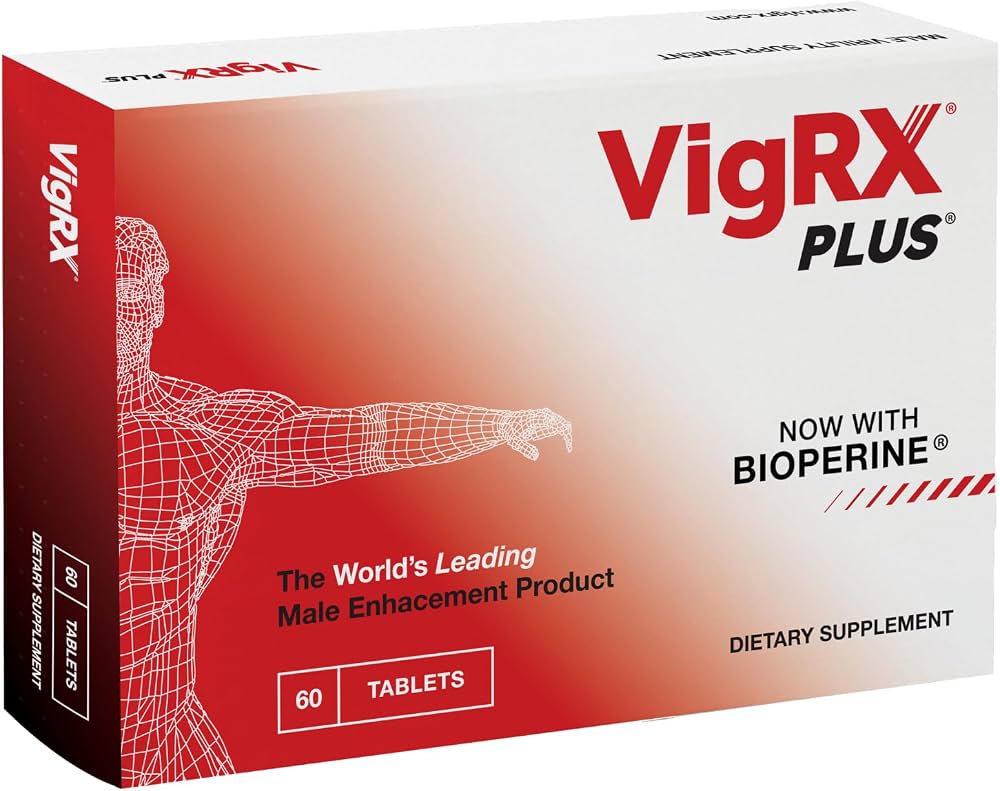
Price: Erectin vs. VigRX Plus
These are the totals on the official order pages on 14 October 2026. Erectin sells in 30-day bottles. We’ve put VigRX Plus next to each package because the price is the same.
Per-day costs assume one bottle lasts 30 days, as the site states. If you take four soft gels a day, as the FAQ allows, check how many are in a bottle — it may not last a month. Free shipping covers the lower 48 US states only.
Our recommendation is simple: buy VigRX Plus instead. At the same price you get a product with its own placebo-controlled trial, a daily dose that matches that trial, and every ingredient amount on the label. The 3- and 6-bottle Erectin bundles add an e-guide and a topical gel; the VigRX Plus bundles add free Semenax bottles instead.
The guarantee
Erectin’s order page offers a 67-day money-back guarantee “with no questions asked”, including on empty bottles — but refunds are issued minus shipping and handling. The FAQ on the same site says the return window is 60 days. When a company’s own pages disagree, plan around the shorter one: get your return in before day 60.
| Term | Erectin | VigRX Plus |
|---|---|---|
| Window | 67 days (60 in FAQ) | 67 days from delivery |
| Opened bottles | Empty bottles accepted; limit not stated clearly | First two opened, plus unopened |
| Shipping | Deducted from refund | Not refunded |
Buy only from the official site. The company says Erectin is sold direct only. Several look-alike sites promise “bigger” erections and big discounts, and some state a different guarantee. A refund is only realistic if you bought from the official store and kept your order confirmation and empty bottles.
Side effects and who should be careful
Because Erectin hasn’t been tested, there’s no trial safety data for it specifically. Its ingredients are broadly similar to VigRX Plus, which was well tolerated over 12 weeks, but without doses we can’t say how similar. The label states it contains soy.
- Soy allergy: avoid it.
- Blood thinners: ginkgo may increase bleeding risk.
- Heart or blood-pressure medication: hawthorn can add to their effects.
- ED drugs or nitrates: talk to a doctor before combining.
- Diabetes or heart disease: these men were excluded from the trial Erectin cites.
ED can be an early warning sign. The trial paper Erectin cites notes that persistent erectile dysfunction can be an early sign of vascular disease. If it’s ongoing, see a doctor before trying any supplement.
Who should buy it — and who should skip it
It might make sense if you…
- Specifically prefer soft gels to tablets, and accept that the trial doesn’t cover this product.
- Have already tried VigRX Plus and want to try a related formula.
Skip it if you…
- Were persuaded by the clinical study. Buy the product it tested: VigRX Plus.
- Want to know what dose you’re taking.
- Are hoping for a bigger penis. Nothing in the research supports that.
- Have a soy allergy.
What we’d want the seller to publish
- A trial of Erectin itself, or a clear statement that the cited study tested VigRX Plus.
- A full supplement-facts panel with every dose, on the site.
- One consistent guarantee — 60 or 67 days, not both.
- The Journal of Urology citation, or removal of the claim.
- Removal of the “bigger” and “28 days” claims, which the cited study doesn’t support.
How to check any “clinically proven” claim yourself
- Open the cited paper, not the product page. Read the abstract.
- Look for the product’s name in the first few lines. If it isn’t there, the study is about something else.
- Compare the format and dose that were tested with the label you’d buy.
- Check who paid for the study and who sells the product.
- Compare prices with the tested product. If they’re the same, buy the tested one.
How it compares with the others we’ve reviewed
Erectin is our lowest-scoring product. Every other product on this list has at least some evidence of its own; Erectin’s evidence belongs to VigRX Plus.
Frequently asked questions
Is Erectin clinically proven?
No published trial of Erectin was found. The study its site cites — Shah et al., 2012 — names VigRX Plus as the product tested. Both are sold by the same company.
Is Erectin the same as VigRX Plus?
They share a maker and most of their named ingredients, but differ in format (soft gels vs. tablets), directions, published doses and whether epimedium is listed. The company doesn’t state they’re equivalent.
Is Erectin cheaper than VigRX Plus?
No. On 14 October 2026 both cost $69 for one bottle, $177 for three and $294 for six.
How many Erectin soft gels should I take?
The FAQ suggests starting with one or two a day with meals and going up to four. No doses per soft gel are published on the site.
Does Erectin make you bigger?
There’s no evidence it does. The trial Erectin cites measured erectile function and satisfaction, not size — and it tested a different product.
How long does Erectin take to work?
Unknown, because it hasn’t been tested. The site says results after 28 days; the trial it cites measured results at 12 weeks.
Does Erectin have a money-back guarantee?
Yes — 67 days on the order page, 60 days in the FAQ, with shipping and handling deducted from the refund. Plan around 60 days.
Is Erectin a scam?
It’s a real product from a real company, and you should receive what you order. Our problem is that its “clinically proven” claim rests on another product’s study, sold at the same price.
Prefer Erectin anyway? Check the current Erectin price. Affiliate note: we may earn a commission on either product. You pay the same price, and it doesn’t change our scores. Full disclosure.
